







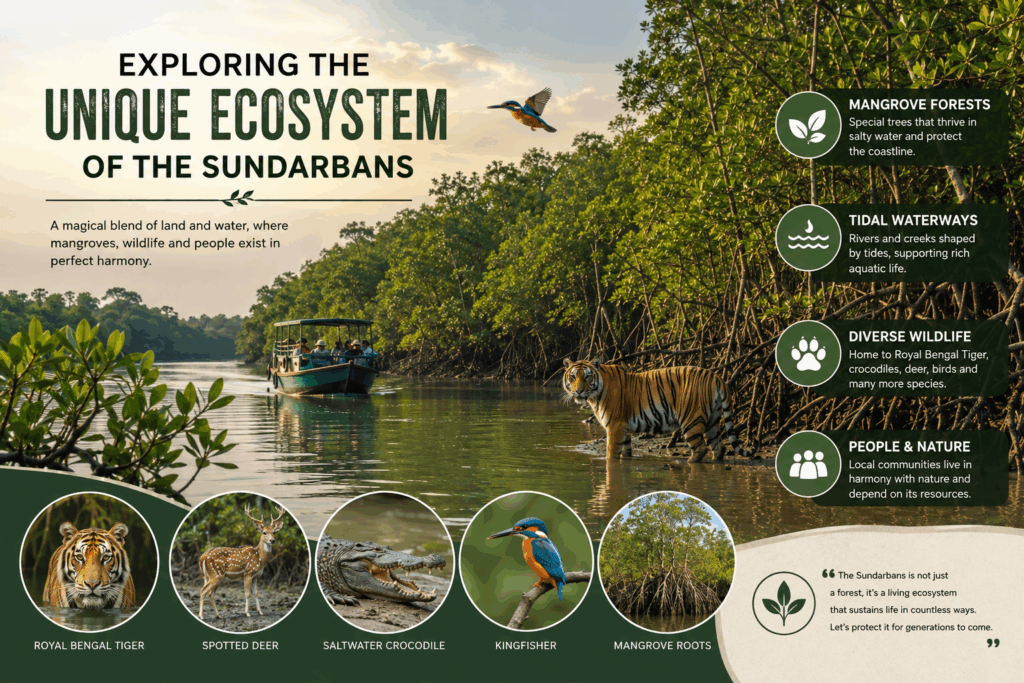
The Unique Ecosystem of the Sundarbans makes it one of the most fascinating natural destinations in India. Located in the delta of the Ganges, Brahmaputra, and Meghna rivers, the Sundarbans is famous for its vast mangrove forests, tidal waterways, rich wildlife, and remarkable natural landscape.
The area is not like other forests as it constantly changes with the changes of water levels, rivers, tides, and mudflats. These changes contribute to the existence of many types of plants and animals. Nature lovers and wildlife enthusiasts from all over the world are attracted to the Unique Ecosystem of the Sundarbans.
🌿 What Makes the Sundarbans Ecosystem Unique?
This region’s primary characteristic is the mangrove forest of the Unique Ecosystem of the Sundarbans. Mangroves have special adaptations for surviving in salty and tidal conditions. Their intricate roots stabilize the soil and give support to many animal species.
The terrain is composed of many islands, rivers, creeks and mudflats as well as thick vegetation. Due to the rise and fall of the tides, the shorelines of the rivers and the water bodies change during the day.
This ever shifting environment serves as a natural environment in which land and water are interrelated.
🌊 The Importance of Tidal Waterways
Water is the key component of the Sundarbans ecosystem. A play of rivers and narrow creeks can be seen in the forest.
Getting aboard a boat safari in the Sundarban would allow one to explore the forest in a totally new way. Gently gliding through narrow creeks presents chances to witness birds, deer, crocodiles, and some other animals at the shores of the waterways.
The tidal processes contribute greatly to the overall health of the mangrove forest.
🐅 Wildlife of the Sundarbans
The Sundarbans is internationally known for its Royal Bengal Tigers, but its biodiversity extends far beyond this iconic animal.
The forest provides habitat for:
- 🐅 Royal Bengal Tigers
- 🦌 Spotted Deer
- 🐊 Saltwater Crocodiles
- 🦎 Water Monitor Lizards
- 🐈 Fishing Cats
- 🐬 Dolphins
- 🦅 Eagles and other birds
- 🐦 Kingfishers, herons, and migratory birds
Wildlife sightings are never guaranteed, which makes every boat safari an exciting experience. Visitors may also discover animal tracks, calls, movement in the vegetation, or other signs of wildlife while exploring the forest.
🌱 Mangrove Plants and Their Adaptations
The flora in the Sundarbans have evolved unique traits that enable them to endure harsh conditions. Some species of mangroves make it possible for them to thrive in brackish water or saturated soil.
Their root system makes them unique. Some mangrove varieties have exceptional root systems that ensure that they are well stabilized in unstable soils and that they are able to supply themselves with oxygen in an environment where ordinary roots would find it difficult to do so.
These plants also make a significant contribution since they form proper breeding and feeding grounds for fish, crabs, birds, reptiles, etc. Hence, the mangrove forests are the basis of the entire ecosystem.
🛶 Experience the Ecosystem on a Sundarban Tour
Taking a guided boat trip is one of the ideal methods to have direct experience of the Unique Ecosystem of Sundarbans.
On a Sundarban Tour, visitors will get to travel by rivers and creeks and learn how forest and fauna exist in relationship to water. It is not limited to encountering a Royal Bengal Tiger.
Visitors will have chance to do bird watching, visit mangrove areas, interact with local fauna, witness village life and understand the importance of preservation of the delicate ecosystem.
🌍 Why Conservation Matters
The Sundarbans is a sensitive region making responsible tourism extremely important. The mangrove forest provides ecological services including helping protect coastal areas from erosion and reducing the impact of storms and tidal events.
Tourists can contribute to conservation by following forest regulations avoiding littering, respecting wildlife keeping noise levels low and choosing tour operators.
Protecting the Unique Ecosystem of the Sundarbans is not important for wildlife but also, for the communities that depend on the surrounding natural environment.
📸 A Perfect Destination for Nature Lovers
The Sundarbans provides an experience that differs from those of typical tourist spots. It is free from noise, with its serene expanse of waterways, lush mangrove forests, amazing sunsets, chirping of birds, and everything one may find thrilling in a place like that.
Photographers get to shoot pictures in exclusive surroundings and wildlife, and families and lovers of adventure will not be let down either as they can get unforgettable experience surrounded by nature.
For anyone who is keen on ecology, wildlife, photography, and environmentally-friendly tourism, the Unique Ecosystem of the Sundarbans is a great chance to be close with nature.
✨ Plan Your Sundarban Adventure
Sundarbans is not just a mangrove forest but also an ecosystem where waterways, tidal flow, flora, fauna, and local people live together in harmony.
A carefully planned Sundarban Tour can provide you with a rare opportunity to discover the magic of Sundarbans and understand the significance of preserving it. Sundarban Eco Trip organizes tours to the Sundarbans along with various other activities like accommodation, boat tours, etc.
If you are planning a wildlife adventure tour in West Bengal, then Sundarbans is the place to be at.
❓ Frequently Asked Questions
What makes the ecosystem of the Sundarbans unique?
The Sundarbans combines mangrove forests, tidal rivers, creeks, mudflats, and diverse wildlife to create a rare ecosystem adapted to changing water and salinity conditions.
What animals can be found in the Sundarbans?
The Sundarbans is home to Royal Bengal Tigers, spotted deer, saltwater crocodiles, fishing cats, monitor lizards, dolphins, and numerous resident and migratory birds.
What is the best way to explore the Sundarbans ecosystem?
A guided boat safari is one of the best ways to explore the forest. It allows visitors to travel through its waterways and observe the mangroves and wildlife from the water.
Why is it important to protect the Sundarbans?
The Sundarbans supports rich biodiversity and provides important ecological benefits, including coastal protection. Responsible tourism and conservation are essential for protecting this fragile environment for future generations.